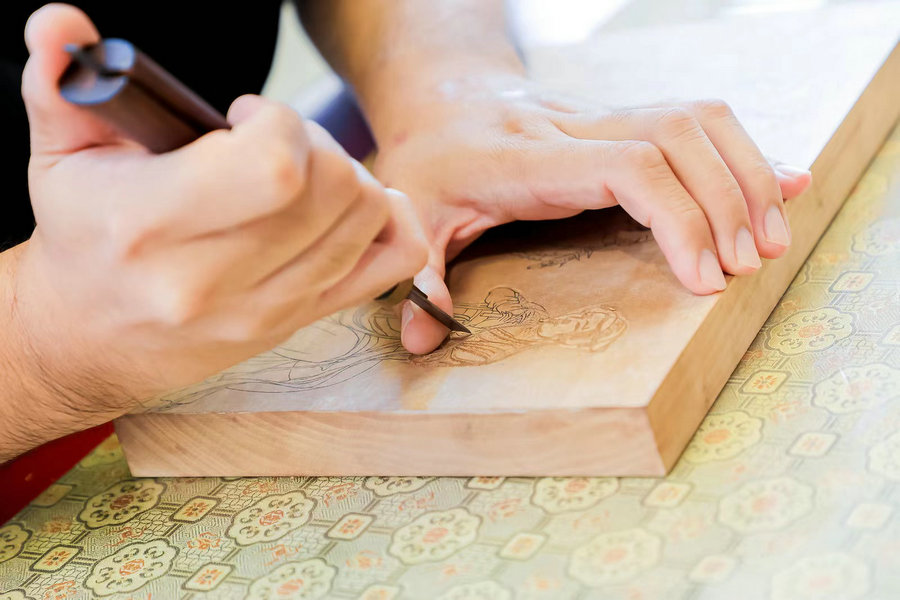
Block Printing Technique
Introduction
The engraved block printing technique is a significant aspect of cultural heritage known as a "living fossil" in the history of printing. Originating from Yangzhou, China, this traditional method has been preserved over centuries, highlighting its importance in the development of printing technologies. Recognized by its rich historical context, the technique was officially listed as a "World Intangible Cultural Heritage" in 2009. It remains one of the few ancient methods that have continued to thrive, bridging the past and present in the art of printmaking.
Historical Context
Engraved block printing dates back over a thousand years, with its earliest usage traced to the Tang Dynasty (618-907). The technique reached its zenith during the Ming Dynasty (1368-1644), a period marked by advancements in arts and culture. It was during this time that block printing became a dominant method for producing books and artistic works, symbolizing traditional Chinese aesthetics. Yangzhou, known for its prosperity and cultural richness, became the epicenter of block printing, maintaining the complete knowledge of the ancient craft to this day.
Techniques and Materials
The traditional block printing process is intricate and requires the collaboration of skilled artisans. The blocks are carved from fine-grained woods like pear or jujube, cut to a standard thickness of two centimeters. These are polished with sandpaper to achieve a smooth surface suitable for engraving. The desired images are drafted on thin paper, then meticulously transferred onto the blocks. The artisan uses the inked designs as a guide to carve the images into the wood, producing raised characters that can be inked and pressed onto paper.
Wood engravings are preferred for their durability and distinctive black-on-white character. The process involves several stages, including testing with colored inks to ensure precision before final prints are produced. Block printing can be applied to a variety of styles, from traditional book prints to modern artistic expressions, making it a versatile technique cherished by artisans worldwide.
Cultural Significance
Block printing is more than a printing technique; it represents a cultural legacy that embodies the spirit and history of Chinese art. The method was crucial in the dissemination of cultural, educational, and religious texts throughout history. Over centuries, block printing has not only served practical purposes but has also become a medium for artistic expression, influencing various art forms across different cultures.
The craft's significance is recognized globally, as evidenced by exhibitions and workshops that showcase traditional block printing. Such events promote cultural exchange and awareness, allowing people worldwide to appreciate the intricate skill and historical value embedded in each print.
Modern Adaptations and Preservation
Today, block printing continues to evolve, with artisans striving to keep the tradition alive while adapting to modern contexts. The integration of block printing with contemporary art forms and digital media has broadened its appeal. Efforts to revive and sustain this craft include educational programs, workshops, and collaborations with artists globally.
One notable example is the cooperation between traditional block printing houses and modern designers to create culturally themed products, such as calendars and artistic prints. These initiatives aim to make block printing relevant to today's audiences, ensuring its techniques and cultural significance are passed down through generations.
The preservation of block printing is not just about maintaining a craft but about safeguarding a rich cultural identity. As part of the intangible cultural heritage, block printing serves as a testament to human creativity and the enduring legacy of traditional craftsmanship in a rapidly changing world.








